The Story of Rose Hill
The Rutledge-Baxter House at 101 Lea Avenue, Nashville
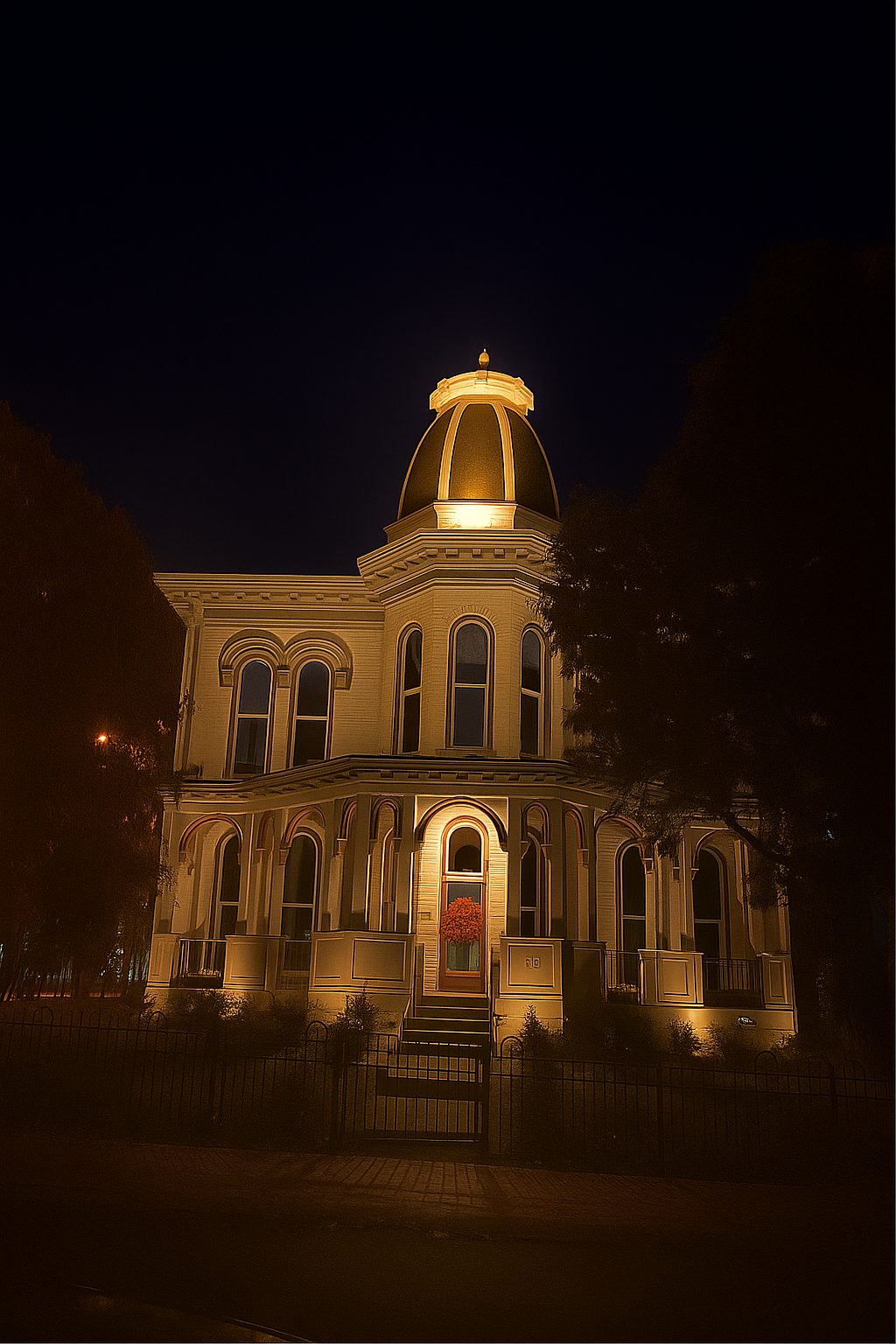
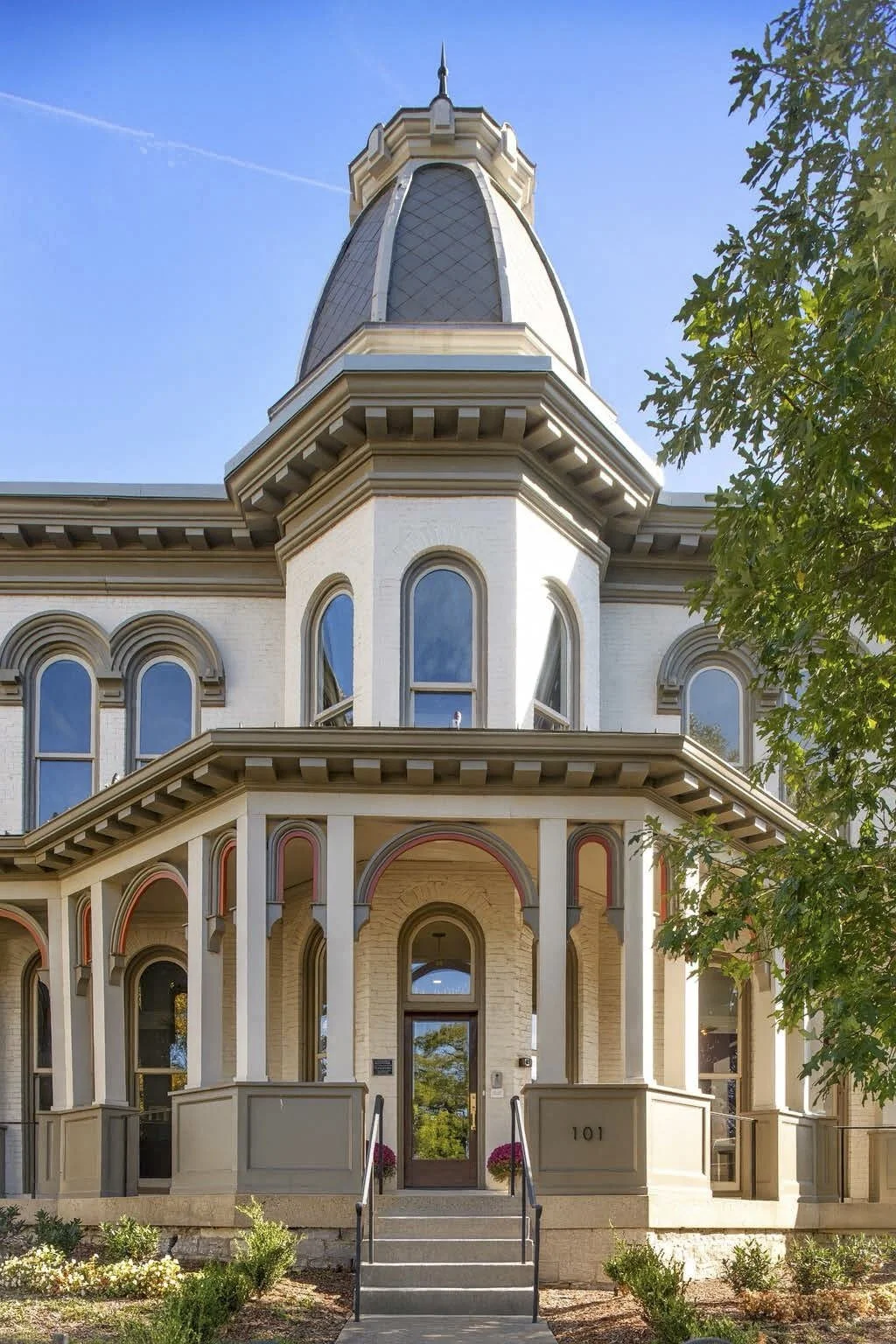
Perched on a rise overlooking the Cumberland River, the house at 101 Lea Avenue—known today as the Rutledge-Baxter House—stands as a rare surviving witness to the earliest chapters of Nashville’s story. Once called Rose Hill, the remaining portion of the once graceful residence traces its roots to the dawn of the nineteenth century, when Nashville was still a frontier town. Its history weaves together tales of two families whose names are written into the nation’s founding documents, the devastations of war, and the enduring elegance of Tennessee’s architectural heritage.
-
The story of Rose Hill begins around 1813, when Joseph Coleman—Nashville’s first mayor—constructed a modest one-story brick home on roughly twenty acres of open land overlooking the river. The neighborhood was then known as College Hill, home to the young Cumberland University, the predecessor to the University of Nashville.
-
In 1820, the property found its most famous owners: Henry Middleton Rutledge and his wife, Septima Sexta Middleton Rutledge. Both hailed from the aristocratic families of South Carolina whose patriarchs—Edward Rutledge and Arthur Middleton—were both signatories to the Declaration of Independence. Septima, the sixth daughter and seventh child of her family, carried a Latin name—‘Sexta’ and ‘Septima’. The couple were first cousins, a union common among Southern elites of the time.
Soon after acquiring the property, the Rutledges expanded Coleman’s small house into a grander residence with a two-story central section and symmetrical wings (“flankers”). One of these original wings still forms part of the rear of the present structure. Septima transformed the hillside into a terraced garden bursting with roses, creating a sweeping walkway that descended toward the river. The opposite side of the property was comprised of an orchard of Cherry trees descending towards College Street, the modern day Third Avenue. From this landscape the estate took its name—Rose Hill.
The Rutledges were renowned hosts. Their parlors welcomed Rachel and President Andrew Jackson, Sarah and President James K. Polk, Sam Houston, and many other prominent Tennesseans. Tradition holds that the Marquis de Lafayette himself may have been received there during his 1825 visit to Nashville. Within the walls of Rose Hill, French was spoken every Friday by Septima’s decree, and musical evenings filled the air played on Septima’s golden harp and songs performed by Septima and her children.
Before settling in Nashville, the Rutledges had already established the vast Chilhowee Plantation in Franklin County, Tennessee—a 50,000-acre estate born from a Revolutionary War land grant. Their journey from Charleston in 1816, leading a caravan of children, enslaved laborers, livestock, and household treasures, symbolized the westward reach of the early republic’s southern elite. Henry Rutledge died in 1844, at the age of 68.
-
During the Union occupation of Nashville, Rose Hill’s gardens and groves were stripped bare as soldiers felled every tree on the property for firewood. The winter of 1864, when the Battle of Nashville occurred, remains one of the coldest winters in Nashville history. During the Union occupation of Nashville, Septima moved from Rose Hill to the home of her daughter and son in law on Church Street. Near the war’s end, a devastating fire consumed most of Rose Hill, leaving only part of the rear kitchen wing standing amid the ruins. The once-elegant mansion was reduced to charred brick.
-
After the war, attorney and Confederate officer Edmund Dillahunty Baxter purchased the damaged property. A graduate of the University of Nashville and brother to railroad magnate Jere Baxter, Edmund set about rebuilding the home. Around 1866–1870, he added the stately front façade that still defines the house today and reoriented the home to face north toward downtown Nashville. Under Baxter’s care, the home once again became a place of distinction. Yet as the city expanded and generations turned, Rose Hill slowly transitioned from a private estate to relic of an earlier age.
-
Through the early twentieth century, ownership of the house changed hands several times. The grandeur of Rose Hill faded as the surrounding neighborhood urbanized, and by the mid-century years the once-proud mansion stood weathered and in need of rescue. Preservationists recognized its significance as one of Nashville proper’s oldest surviving structures—a link to the city’s earliest families.
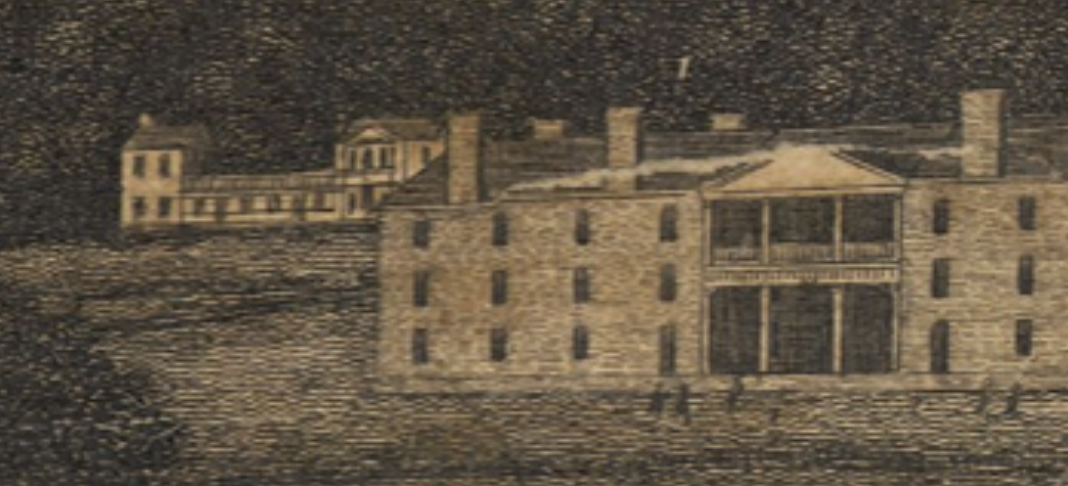
The only known image of the original Rose Hill contained within an 1832 map of Nashville, is located in the distance behind what was then the hospital of the Medical School of the University of Nashville. The depiction shows what would have been one-half of the full structure of Rose Hill.